Filters
Question type

Which of the following is not a type of step-growth polymer?


A) polyamide
B) polyester
C) polyolefin
D) polyurethane
E) epoxy resin

F) C) and D)
G) A) and D)

Correct Answer

verifed

verified

Which of the following is a polymer that stretches and reverts to its Original shape.


A) a plasticizer
B) a thermoplastic
C) an elastomer
D) an oriented polymer
E) a crystallite

F) B) and D)
G) A) and C)

Correct Answer

verifed

verified

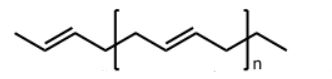
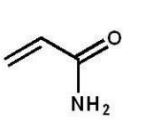
The following polymer is an example of The following polymer is an example of   A)  an atactic polymer. B)  a condensation polymer. C)  a conducting polymer. D)  an isotactic polymer. E)  a syndiotactic polymer.


A) an atactic polymer.
B) a condensation polymer.
C) a conducting polymer.
D) an isotactic polymer.
E) a syndiotactic polymer.

F) B) and E)
G) All of the above

Correct Answer

verifed

verified

D

Which of the following are step-growth polymers?


A) Which of the following are step-growth polymers? A)    B)    C)    D)  A and B E)  B and C
B) Which of the following are step-growth polymers? A)    B)    C)    D)  A and B E)  B and C
C) Which of the following are step-growth polymers? A)    B)    C)    D)  A and B E)  B and C
D) A and B
E) B and C

F) A) and E)
G) B) and E)

Correct Answer

verifed

verified

B

A copolymer in which there are distinct groups of each monomer is called a(n) ____________.


A) block copolymer
B) graft copolymer
C) alternating copolymer
D) isotactic polymer
E) oriented polymer

F) D) and E)
G) B) and E)

Correct Answer

verifed

verified

Most highly cross-linked polymers are known as ____________ Polymers.


A) thermoplastic
B) thermosetting
C) oriented
D) biodegradable
E) elastomeric

F) A) and B)
G) None of the above

Correct Answer

verifed

verified

B

Which of the following statements is not true of step-growth polymers?


A) They may be formed by reaction of a single compound with different functional groups on each end.
B) They may be formed by reaction of two different bifunctional compounds.
C) They can be formed by way of chain reactions.
D) They have heteroatoms as part of their backbone.
E) When the polymer is formed, a small molecule is often lost.

F) C) and E)
G) B) and C)

Correct Answer

verifed

verified

Which of the following polymers is(are) most commonly recycled?


A) PETE
B) HDPE
C) LDPE
D) PS
E) A and B

F) A) and E)
G) B) and E)

Correct Answer

verifed

verified

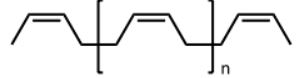
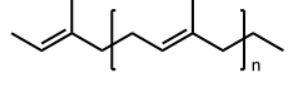
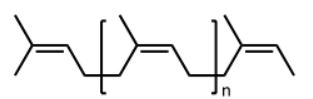
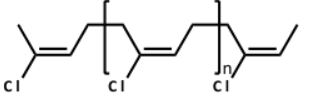
Which of the following polymers represents natural rubber?


A) Which of the following polymers represents natural rubber? A)    B)    C)    D)    E)
B) Which of the following polymers represents natural rubber? A)    B)    C)    D)    E)
C) Which of the following polymers represents natural rubber? A)    B)    C)    D)    E)
D) Which of the following polymers represents natural rubber? A)    B)    C)    D)    E)
E) Which of the following polymers represents natural rubber? A)    B)    C)    D)    E)

F) A) and E)
G) A) and B)

Correct Answer

verifed

verified

An alternating copolymer has the general structure of ____________.


A) A-B-A-B-A-B-A-B-
B) AA-BB-AA-BB-AA-BB-
C) AAAA-BBBB-AAAA-
D) AA-B-A-B-A-BB-A-
E)
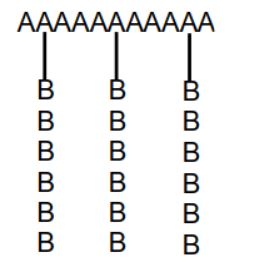
An alternating copolymer has the general structure of ____________. A)  A-B-A-B-A-B-A-B- B)  AA-BB-AA-BB-AA-BB- C)  AAAA-BBBB-AAAA- D)  AA-B-A-B-A-BB-A- E)

F) B) and D)
G) A) and C)

Correct Answer

verifed

verified

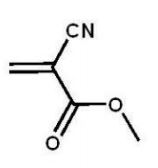
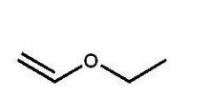
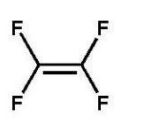
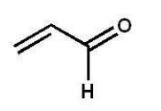
Which monomer would most easily undergo cationic polymerization?


A) Which monomer would most easily undergo cationic polymerization? A)    B)    C)    D)    E)
B) Which monomer would most easily undergo cationic polymerization? A)    B)    C)    D)    E)
C) Which monomer would most easily undergo cationic polymerization? A)    B)    C)    D)    E)
D) Which monomer would most easily undergo cationic polymerization? A)    B)    C)    D)    E)
E) Which monomer would most easily undergo cationic polymerization? A)    B)    C)    D)    E)

F) A) and E)
G) B) and D)

Correct Answer

verifed

verified

Showing 1 - 11 of 11

Related Exams

Show Answer